
𝗧𝗵𝗲 𝗪𝗲𝗮𝗸𝗲𝘀𝘁 𝗗𝗶𝗴𝗶𝘁𝗮𝗹 𝗟𝗶𝗻𝗸: 𝗪𝗵𝘆 𝗽𝗹𝗮𝘁𝗳𝗼𝗿𝗺𝘀 𝗴𝗲𝘁 𝘀𝘁𝘂𝗰𝗸 𝗶𝗻 𝘁𝗵𝗲𝗶𝗿 𝗽𝗮𝘆𝗺𝗲𝗻𝘁 𝘀𝘁𝗿𝘂𝗰𝘁𝘂𝗿𝗲𝘀
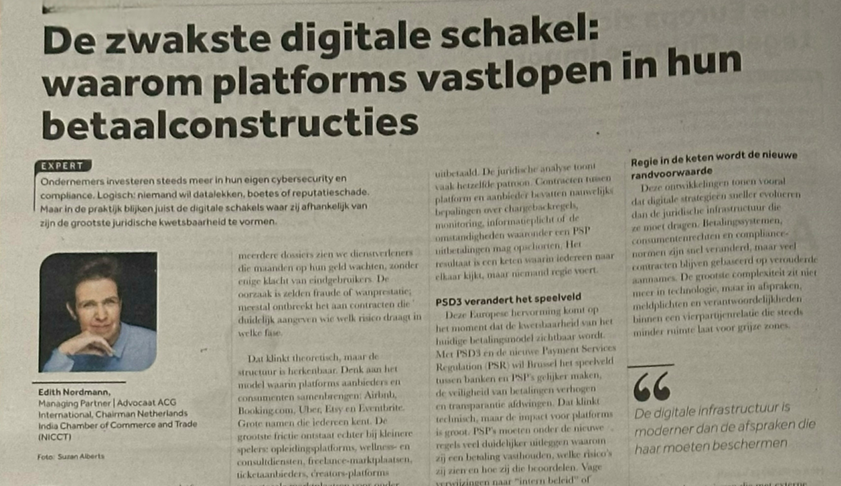
In the December 8, 2025 edition of Het Financieele Dagblad, the Managing Partner of ACG International highlights that many platforms face withheld funds by PSPs. Not due to errors, but because platform contracts fail to meet PSP compliance requirements. As a result, payments can be blocked and the entire chain can stall. Edith Nordmann explains how platforms can prevent these issues.
Supply Chain Management
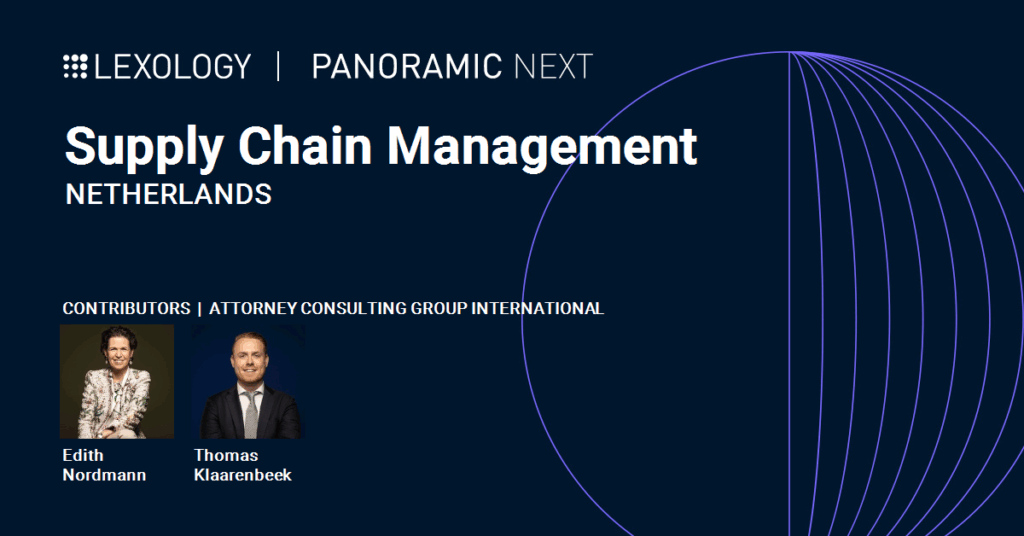
ACG International’s Edith Nordmann and Thomas Klaarenbeek shared their insights on managing ESG, compliance risks, navigating export controls, etc. in the Lexology Panoramic Next edition.
Can You Demand Cash From Your Bank? Amsterdam Court Says No

Can customers always access their money? A recent court ruling shows banks may terminate accounts due to compliance risks. Learn about the right to a basic payment account, AML obligations, and the lack of protection for businesses.
Legal changes in the Netherlands as of 1 July 2025: What international entrepreneurs need to know

As of July 1, 2025, new laws and regulations have come into effect in the Netherlands that impact businesses. These legal changes are relevant for both Dutch and international entrepreneurs operating in the Dutch market. The most significant updates concern business financing, employment law, and real estate and leasing. Make sure your business is fully prepared for these regulatory changes.
Positive reference letters: binding obligation or courtesy gesture?

A positive reference letter is more than a formality when specific agreements have been made. By law, an employer is only required to include objective facts, such as the employee’s role and duration of employment. Additional positive remarks are only mandatory if explicitly agreed upon, for example, in a settlement agreement.
New European Anti-Money Laundering rules will have major impact in the Netherlands

New European anti-money laundering regulations tighten internal obligations and governance:
In addition to a broader scope, the requirements themselves are becoming more stringent. The AMLR mandates that institutions must have a comprehensive and up-to-date AML/CFT compliance framework in place, including documented internal procedures, risk assessments, and control mechanisms.
Temporary Agency Work via Platforms: Even Private Households Can Be Considered Hirers

Organisations that hire flexible workers through digital platforms – such as platform companies, staffing agencies, HR professionals and clients – need to stay alert. The ruling in the Helpling case shows that these platforms don’t automatically fall outside of employment law. Even when working with freelancers or self-employed workers, there’s still a chance they may be classified as employees or temporary workers.
Can a bank terminate your account without reason?

A foundation that used donor funds for a personal payment led to suspicion from the bank. The judge ruled that the bank was entitled to terminate the account because the foundation did not sufficiently cooperate with the mandatory client investigation and the money flows were unclear. This highlights the importance of transparency, cooperation with the bank, and the proper use of business accounts.
Code of Conduct Against Inappropriate Behaviour in the Workplace: New Legislation Coming

Many employees still find it difficult to report inappropriate behaviour, either because they’re unsure if it’s serious enough or because they don’t know where to turn. Employers also sometimes struggle to draw the line. A clear code of conduct can help by defining in advance what constitutes inappropriate behaviour within the organization, preventing misunderstandings, and allowing for quicker intervention when necessary.
Is the bank liable for fraud? Court: ING must disclose fraud signals

ING was required by the court to clarify what was known within the bank about fraud, such as reports or suspicious transactions. Banks are not only responsible for their own customers, but also for third parties who suffer damage due to fraud by customers. If a bank is aware of abuse, it must intervene. A mere suspicion is not enough; there must be actual knowledge. Victims often struggle to prove this, but the court ruled that they must be given the opportunity to support their case.